
While the Indian government has been procuring Covid-19 vaccines at low prices so far, manufacturers have to declare the prices of vaccines they would supply to the open market (industries, private hospitals, etc) and state governments before May 1. Sohini Das reports.
Sputnik V is already approved in India and Sinovac is unlikely to come in as it does not meet the criteria.

The second wave of the pandemic has not only crippled medical infrastructure in terms of hospital beds, but has also led to bottlenecks in invasive ventilators and medical oxygen capacities and supplies.
Three of the four major states delayed testing despite worsening indicators. Only Tamil Nadu quickened the pace after the first signs of deterioration.
One challenge for many laboratories in ramping up is the shortage of trained manpower for collecting samples, report Sohini Das, Vinay Umarji and Virendra Singh Rawat.
'In case of shortage of other raw material, like filters and bags, one can try to develop another vendor. However, for chemicals as critical as adjuvants, this is not possible'
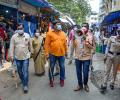
As the second wave sweeps through the country, restrictions on movement and public activity are not as strict, even though the caseload and death rate is worse than before, reports Abhishek Waghmare.
This will be an upfront payment for the vaccine doses that these two companies will supply to the government.

'The US has invoked the Defence Act and banned export of raw materials.' 'This is as good as banning vaccines.'

The production of Covaxin will increase from the current 10 million doses per month to 60 million-70 million by July-August.
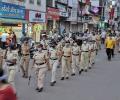
It has taken 51 days to reach a daily caseload of 84,000 from 11,000, as against 85 days taken in the first wave, report Abhishek Waghmare and Sohini Das.

'I don't think anybody would want to be in my position today where every head of State has to be explained that I am prioritising my country because there is a surge in cases.'
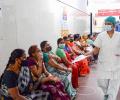
Both manufacturers have sought funds in excess of Rs 150 crore under the department of biotechnology's Mission Covid Suraksha scheme. Announced last November, the scheme has an outlay of Rs 900 crore to help develop Covid vaccines, from the clinical development stage to setting up production sites.

'No approval was given to Sputnik V on Thursday. Some queries have been asked on safety, efficacy, and logistics, which the firm will have answers to at the next meeting'
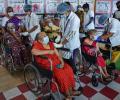
'We expect to get the approval in the next few weeks,' says Deepak Sapra, CEO, API and pharmaceutical services, Dr Reddy's Laboratories (DRL).

To achieve herd immunity, rapid vaccination is the only hope.
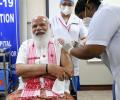
'He came back from the US only to work for his country.' 'He has invested his fortunes to build this company and is married to his work.' 'Rarely does one see such commitment.'

While the Constitution makes everyone in India eligible to work anywhere in the country, states have used legal loopholes to frame laws.
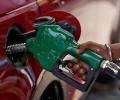
While consumers feel that petrol pinches directly, diesel hurts indirectly, as it is an input in almost all the goods and services we use.
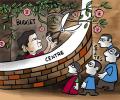
Consumers are paying an exorbitant 180 per cent tax on petrol, and 140 per cent on diesel in Delhi and in most other towns in India. Little wonder then that the central government expects a staggering Rs 3.46 trillion by levying excise duties on retail sale of the two fuels this year, and Rs 3.2 trillion the next. States would generally have had reason to cheer, as they command a 41 per cent share in Centre's tax revenues. But as the Centre has raised excise duties in the form of "cess," the revenue proceeds are by nature not shareable with states.
 © 2026 Rediff.com - Investor Information - Advertise with us - Disclaimer - Privacy Policy - Sitemap - Feedback - About us - Terms of use - Grievances